

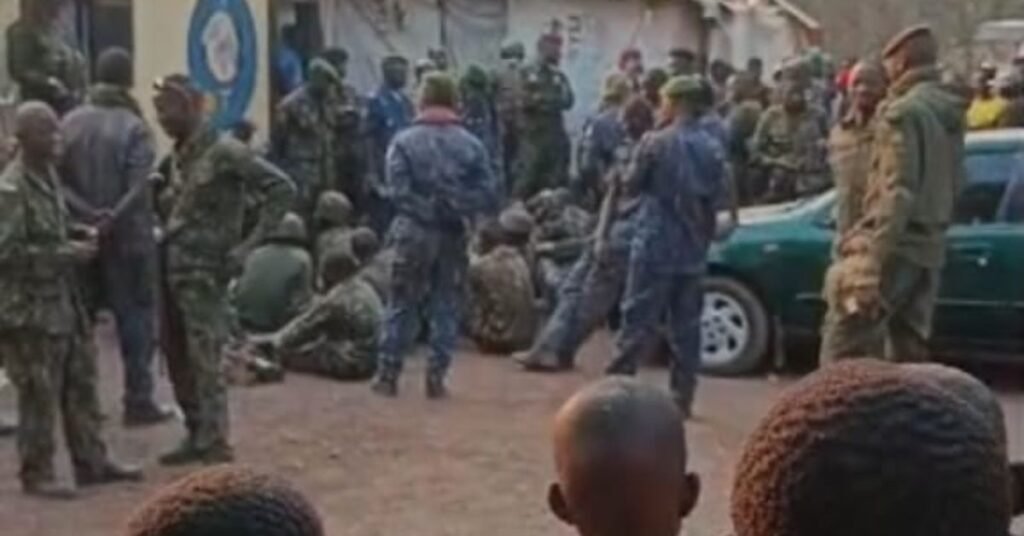
A dangerous diplomatic and territorial rift has reopened between the sister republics of Sierra Leone and Guinea following the detention of 16 Sierra Leonean security personnel by the Guinean Armed Forces (GAF).
The incident, which occurred in the remote border regions of Falaba in Sierra Leone and Faranah in Guinea, has triggered a flurry of diplomatic activity as both nations present starkly different accounts of geography, intent, and sovereignty.
The crisis centers on a disputed patch of land near the village of Kalieyereh within the Sulima Chiefdom. According to the Government of Sierra Leone, their joint security team—comprising the Republic of Sierra Leone Armed Forces (RSLAF) and the Sierra Leone Police (SLP)—were engaged in peaceful civil engineering on February 23. The team was reportedly molding bricks for a new border post and accommodation facility on soil Freetown insists is definitively Sierra Leonean.
However, the Guinean General Staff, led by Lieutenant General Sory Bangoura, presents a more provocative version of events. Conakry claims the arrest took place a day earlier, on February 22, alleging that the Sierra Leonean contingent had penetrated 1.4 kilometers into Guinean territory in the Koudaya district. Guinean authorities provided specific GPS coordinates to back their claim that a foreign military presence had illegally established a tent and hoisted a national flag on their sovereign land.
The fallout from the encounter has been immediate and severe. Currently, 16 Sierra Leonean officers, including at least one high-ranking official, remain in Guinean custody. Furthermore, Guinean forces seized the arms, ammunition, and logistical supplies of the RSLAF/SLP team. In a move that suggests a formal legal process rather than a quick military-to-military handover, the GAF has handed the detainees over to the judicial police in Guinea for further investigation.
On the diplomatic chessboard, Freetown has adopted a posture of active engagement, signaling its desire for an amicable and peaceful resolution rather than military escalation. The Sierra Leonean government has already briefed regional bodies, including the Mano River Union (MRU) and ECOWAS, seeking a sub-regional mediation framework. A fact-finding mission has been dispatched from Freetown to verify the sequence of events and the exact location of the incident. In contrast, the rhetoric from Conakry has been focused on territorial integrity and vigilance. Lieutenant General Bangoura’s commendation of his troops for their responsiveness suggests a military that is highly sensitized to border movements and ready to act decisively.
These strategic implications suggest the incident is not an isolated event but part of a long-standing history of border ambiguity, most notably the decades-long dispute over the border town of Yenga. The construction of a permanent border post by Sierra Leone in Falaba likely acted as a catalyst; such structures represent a hardening of the border that can trigger defensive reactions from neighboring states if the exact demarcation is not mutually agreed upon.
Potential paths to resolution now rest on several factors. Much will depend on the fact-finding phase and whether the GPS coordinates provided by Guinea align with international treaties or if Sierra Leone’s mission can prove the site was within the Sulima Chiefdom. Historically, such tensions are often defused through high-level presidential telephone diplomacy, which could lead to the unconditional release Freetown is demanding. Should bilateral talks stall, the involvement of ECOWAS observers may be required to stabilize the border zone and prevent a localized skirmish from evolving into a broader conflict.
As of February 25, the 16 officers remain in Guinea. While both governments have expressed a desire for peace, the presence of the judicial police in the process and the heightened mobilization of troops along the frontier suggest that the resolution of this crisis will require significant political will from both President Julius Maada Bio and the Guinean leadership.